

Yana Paco: The Rarest Alpaca Fiber
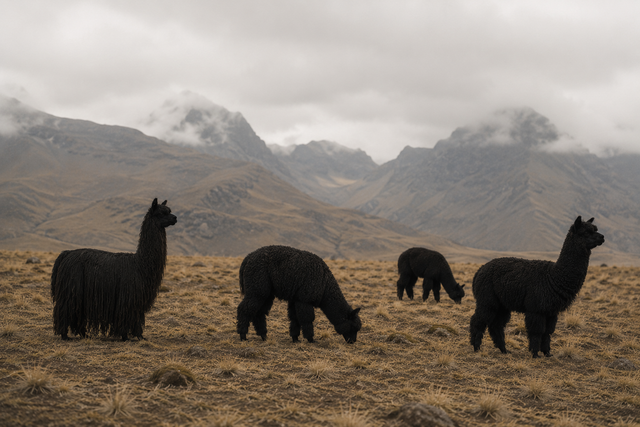
Yana Paco, pure black alpacas from the Pacomarca project in the Peruvian Andes.
In Quechua, it is called Yana Paco — black alpaca. It is one of the rarest natural fibers in the world, and for decades, it nearly disappeared.
For generations, breeders favored white alpacas almost exclusively — their fiber can be dyed any color, making them easier to sell into a market built on uniformity. Black alpacas, with their fiber locked into a single, unrepeatable shade, fell out of favor. By the time anyone thought to count them, pure black alpacas had dwindled to less than half a percent of Peru's entire alpaca population.
The Pacomarca Project
High in the Andes, between Cusco and Puno, an experimental research station called Pacomarca has spent more than two decades studying alpaca genetics — not to standardize the animal, but to understand it. It was here that a small program began with a simple goal: bring the black alpaca back from the edge.
Today, Pacomarca is home to the largest herd of pure black alpacas in the country. What was once considered a genetic inconvenience is now recognized as something closer to what it always was — rare, and worth preserving.
A Color Nature Chose
Yana Paco fiber is never dyed. Its color is entirely its own — the kind of black that only comes from the animal itself, not a dye bath. For a brand built on restraint, this matters: nothing added, nothing altered. Just fiber, exactly as it grew.
At The Knitter Club, pieces made from Yana Paco are treated accordingly — worked by hand, in limited quantity, by the same atelier that shapes everything we make. Not because black is trendy, but because it is genuinely rare, and rarity, worn quietly, is its own kind of luxury.