

Why Alpaca Fiber Is Sustainable
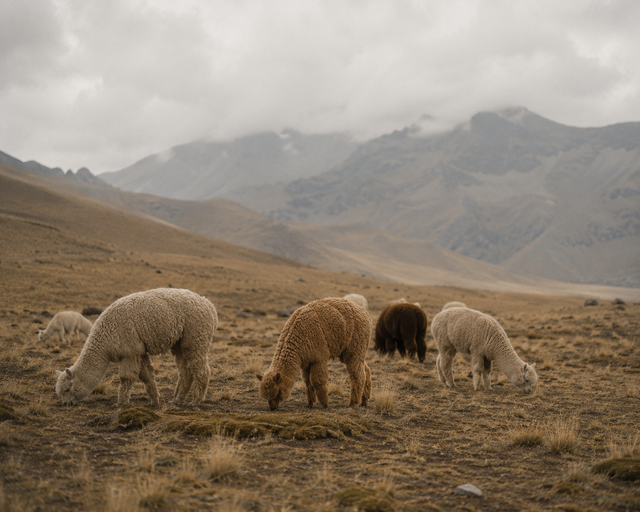
Alpacas have been called the Gold of the Andes since ancient times — prized not only for their fine fiber, but for their social and religious significance to the Inca. The Inca held deep reverence for Pachamama, Mother Earth, and that reverence lives on today in how their descendants still raise these animals. Meet the alpaca, or Vicugna paco in Quechua — one of the most quietly sustainable animals in the world.
A Gentle Footprint, By Design
What makes alpacas so well suited to the Andes isn't only their fiber — it's their anatomy. Where most animals have hooves, alpacas have two soft-padded toes, which distribute their weight gently and leave the land beneath them largely undisturbed.
Their eating habits tell the same story. Alpacas lack teeth in their upper palate — often called "eco teeth" — which changes the way they graze. Rather than tearing grass out by the root, as many woolly animals do, alpacas pluck only the blade, leaving the root intact. Over generations, this has meant less soil erosion, and pastures that regenerate rather than deplete.
Twenty Natural Colors, No Extra Cost to the Earth
Alpaca fiber occurs naturally in roughly twenty distinct shades — from deep browns to soft ivories and greys. For a brand working entirely by hand, this matters: fewer garments require dyeing, which means less water, less energy, and less chemical processing. The color, like everything else at The Knitter Club, comes largely as nature made it.
A Legacy, Not Just a Material
None of this is new. It is, in many ways, the same relationship the Inca held with these animals centuries ago — one of restraint rather than extraction. Every Knitter Club piece carries that same principle forward: fiber taken gently, worked by hand, and made to last.
In our next piece, we'll go beyond sustainability — and explain what makes alpaca fiber garments so remarkably comfortable to wear.